

Understanding One Nation’s rise
One Nation’s rise is real and worrying. But rather than feel out vibes, we should interrogate the data on where they’ve grown and why.


South Australia’s recent election brought with it an uncomfortable reality for Australia’s political leaders: namely, that One Nation’s surge in polling is unlikely to stop at just that. One Nation’s primary vote of 22% nearly matched the 24% they’re polling at nationally. And while they’re currently only expected to win 2 or 3 seats, their rise signals a structural shift in Australia’s electoral landscape.
In many ways, this outcome should not be surprising. Support for far-right politicians have risen across Europe, the Americas and South-East Asia. And, while Australia’s compulsory-voting system is often touted as an insurance policy for our polity, the last twelve months have shown that this can only hold for so long.
In the aftermath of South Australia’s election, there’s been a lot of talk about One Nation. But most of this has been vibes-based rather than evidence-based: no mainstream outlet has yet published a data-driven teardown of One Nation’s rise, and too often we rely on single polls to understand their growth. That’s a big problem. Without a robust understanding of which people are swinging to One Nation and why, our nation will struggle to address their rise. It’s important we do that work.
To address this, I (alongside my Inflection Points colleague and good friend Luke Heeney) have spent the good part of the last week pulling together public data on One Nation’s rise. We analyzed booth-level results in SA, alongside aggregations of demography-linked polls across the nation. Using this, we’ve identified which parts of the country are most at-risk of seeing a rise of One Nation.
We identify four lessons from the available data.
One Nation’s support is driven by geography and education.
55% of One Nation’s new supporters voted for the Coalition in 2025.
Immigration is a stand-out issue for One Nation’s voters, but tied to cost of living.
This is a battle with the Coalition, making it hard for One Nation to win seats.
This article tackles them in that order.
The biggest determinants of One Nation’s support are geography and education
Rural areas support One Nation at around 2x the rate of inner metro areas. And, because a high share of the electorate lives in outer-suburban areas, around half of their support comes from these communities. Critically, this means that their rise is not a low-income phenomenon; rates of support are roughly even across the income spectrum and, if anything, follow a U-shape, with greater support among low and high income Australians.
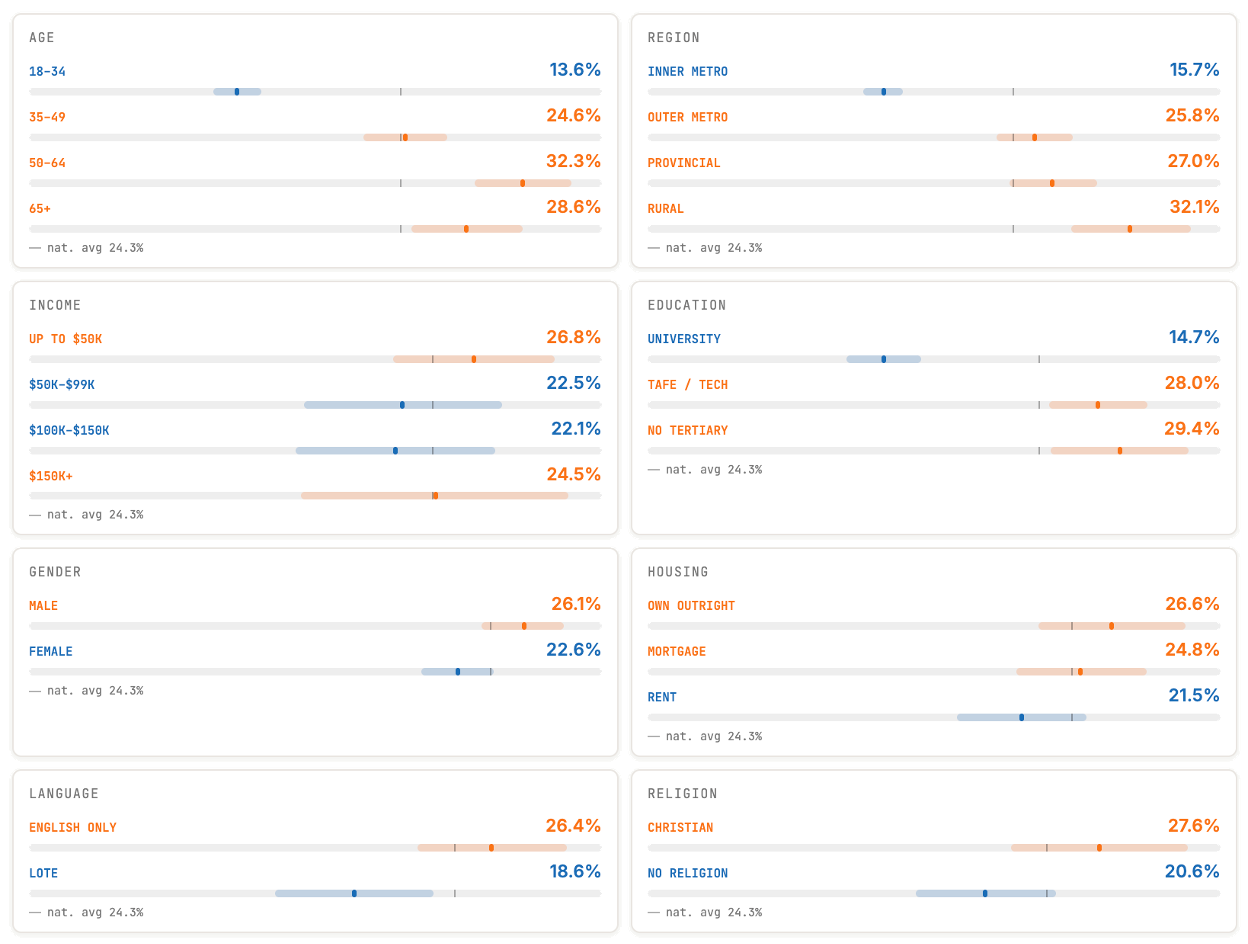
This U-shaped pattern is particularly revealing. Among lower-income voters, support likely reflects acute material pressure: rising prices, stagnant wages, and a sense that the system is no longer delivering. But among higher-income voters, the drivers may be quite different: disaffection with taxation, regulation, or a broader ideological shift against institutions.
The university/non-university divide is also particularly strong, suggesting that the shift to One Nation is as much a cultural phenomenon as it is a materially motivated shift. For Labor, a party which has historically represented working class parts of the country, the union movement could play a critical role in reaching out to and engaging potential One Nation voters.
Most of One Nation’s new supporters voted for the Coalition in 2025
Much of the discussion after the South Australian election has involved Labor types wondering how at risk their primary vote is from One Nation’s rise, with worries that their small swing was masked by former Liberal voters moving to Labor, and former Labor voters moving to One Nation. Polling data provides a clear answer to this at the national level: only around 10% of 2025 Labor voters now support One Nation, while 30% of 2025 Liberal voters are now supporting One Nation (making up 40% of their total support and over half of their new voters).
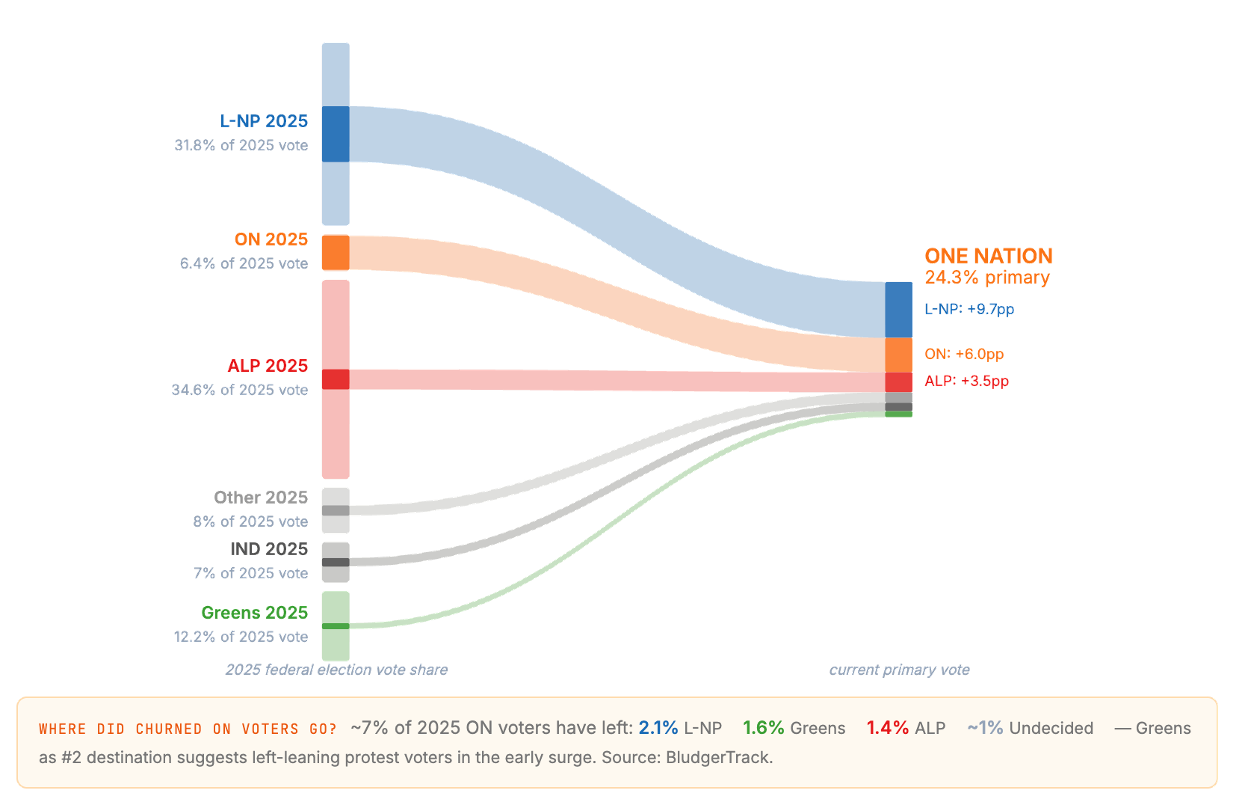
This reframes One Nation’s rise. For Labor, it is an opportunity to consolidate gains among voters drifting away from the Coalition, particularly in outer suburban and regional seats. For the Coalition, however, the challenge is existential. It is being squeezed from both sides: losing moderate voters in inner-city areas while hemorrhaging its traditional base to One Nation. Now the question is whether it is even possible to rebuild a coalition broad enough to do both simultaneously.
Immigration is a stand-out issue for One Nation’s voters, but likely tied to cost of living
Following the last election, the 2025 Australian Election Study identified cost of living as the primary concern for voters of all stripes. But One Nation Voters disproportionately blame immigrants. 86.5% of One Nation voters want immigration reduced by a lot, more than double the National Party’s 43% and far above the Liberal’s 51%. Compared to the Liberals, more One Nation voters think immigrants raise housing costs (83% of ONP, 70% of Liberals), and very few consider immigration good for the economy (30% of ONP, 50% of Liberals).1
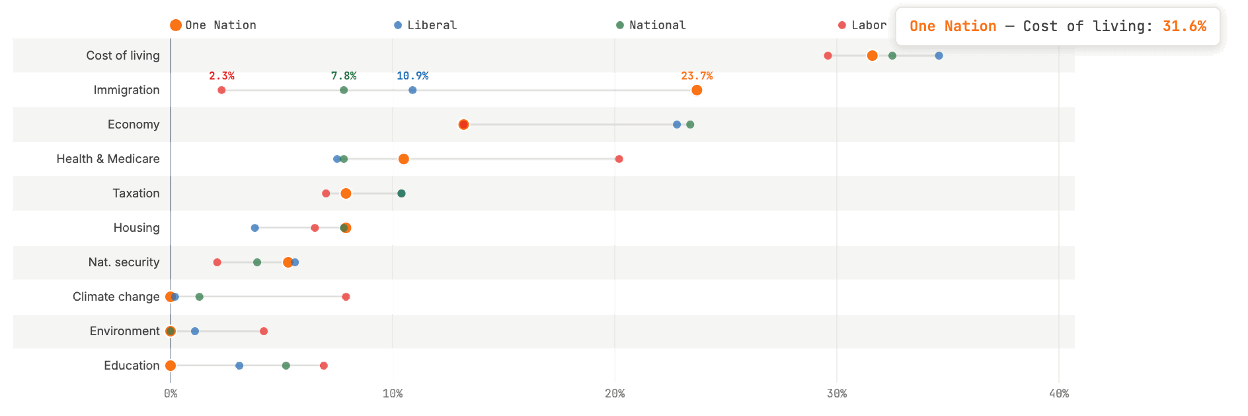
Nearly a quarter of One Nation voters cite immigration as their top voting issue, making it almost as important as cost of living itself. In terms of top voting issue, immigration is the stand out differentiator for One Nation: only 11% of Liberal voters and 8% of National voters put immigration as their top priority. Just as revealing is what One Nation voters don’t care about. In the survey sample, not a single One Nation voter participating in the electoral study said that the environment, education or climate change mattered most to them.
These data tell us that, among One Nation voters, immigrants are the scapegoat for cost of living pressures. Recall that, even among One Nation voters, cost of living is still the ultimate priority. The challenge for the major parties is to focus on the economic underlying issues that are fueling this sentiment, or address voters’ concerns about the economic impact of migrants.
This will be a battle with the Coalition, making it hard for One Nation to win seats
Luke and I built two separate models to predict which seats are likely to face the largest swing towards One Nation: one based on the booth-level trends in South Australia, and another using demographic data outlined in national polls. We then took an average of their outputs. Of the top fifteen seats, thirteen were held by the Coalition. The seat of Gilmore was the sole Labor electorate on the list (and was at the bottom) of it.
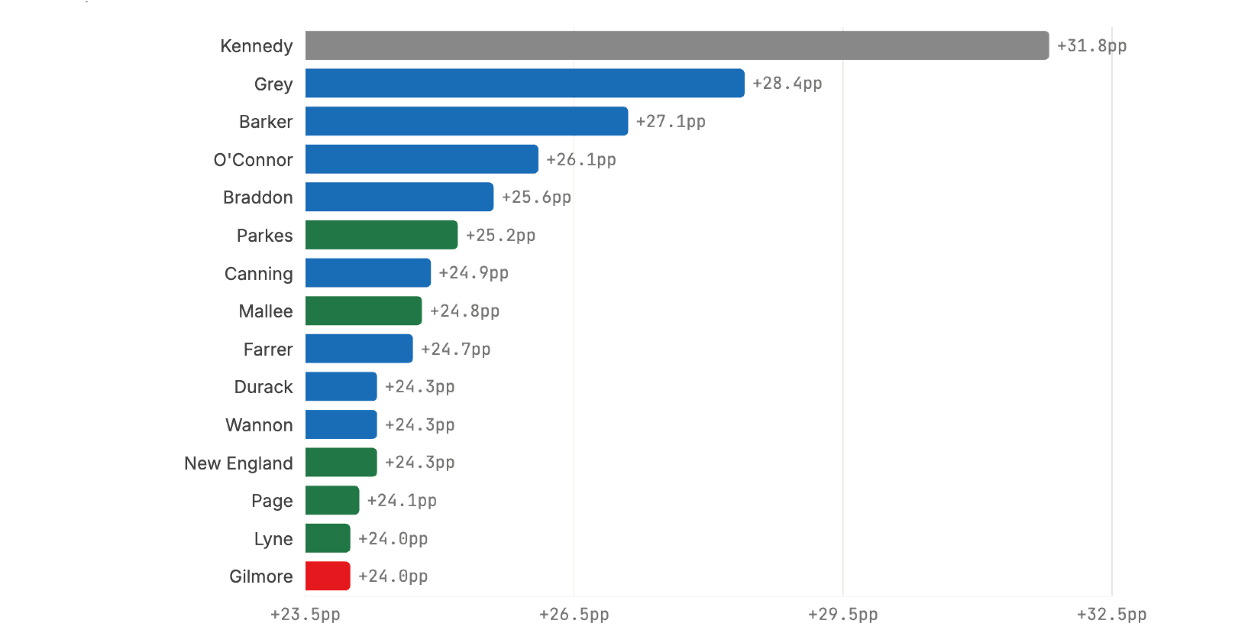
And evidence from South Australia suggests that One Nation can only win seats when pulling votes away from the Liberals. The two South Australian seats One Nation has taken, Ngadjuri and Hammond, suggest a common pattern: the party looks much more viable when the Liberals do not finish second. That’s because Labor preferences typically flow disproportionately to the Liberals, which push them over the line when head to head with One Nation.
This brings up a difficult question for Labor voters about whether strategic voting makes sense (where pushing a Liberal candidate into second place could make One Nation less competitive in winning the actual seat). There will certainly be more talk of this come the next election.
So what?
Having lived in the US for the last two years, Luke and I have seen first hand what happens when the rise of populist leaders is underestimated. And it’s playing out in Australia. A large and growing share of Australians feel economically strained, culturally distant from decision-makers, and politically unrepresented. One Nation has become the home for that demand.
Responding with rhetoric, positioning, or vibes will not be enough. Parties need to engage directly with the voters and places where this shift is occurring (particularly in outer suburban and regional Australia) and build a credible offer around economic security and material improvement in living standards.
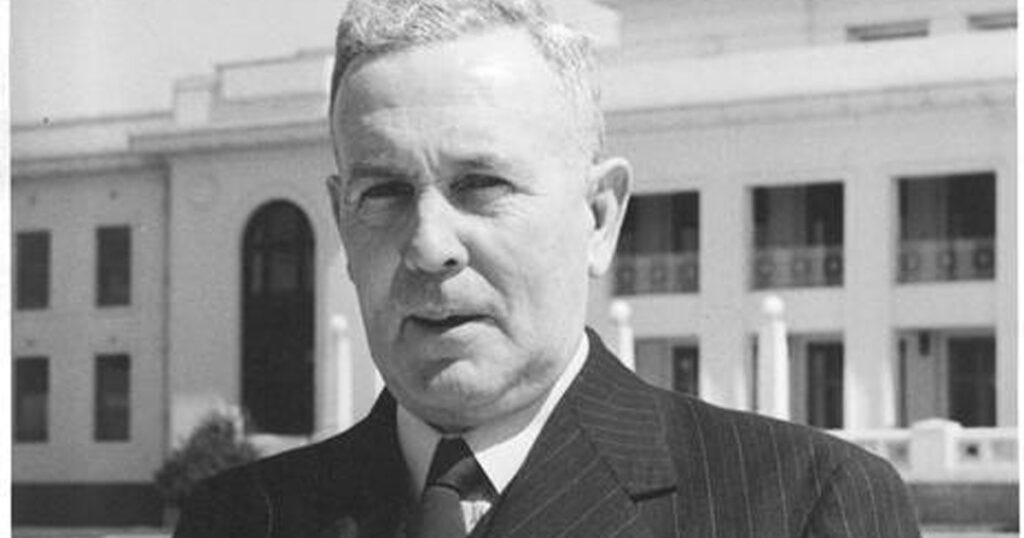
Many in the Liberal Party have suggested that they should look to Menzies to arrest this decline. Perhaps Labor should look back to Chifley’s Light on the Hill speech for guidance. Its core message about Labor’s mission remains strikingly relevant: “bringing something better to the people, better standards of living, greater happiness to the mass of the people.”
 | A guest post by
|
Chifley's speech is a good one. Mali's victory speech the other night a good crack too.
Liked this Manning and Luke! Reminded me of Antony Green's analysis of preference flows from the last federal election (https://antonygreen.com.au/fed2025-independent-two-party-preference-flows/). Takeaway being that Teal voters overwhelming preference the ALP over others. Will be interesting to run this analysis from the ONP angle.
I find the breakdown by housing very interesting! If national distribution between those three categories is about a third, does this spread mean people who own their homes outright more likely to be voting for one nation than people who rent? How does this square up with the suggestion that housing and cost of living scapegoated to immigration is the main driver, when the owner cohort would be the least effected by that?